In dental and medical settings, gauze is a fundamental absorbent material made from cotton or synthetic fibers. It is a versatile staple used for everything from infection control to post-surgical care.
Description
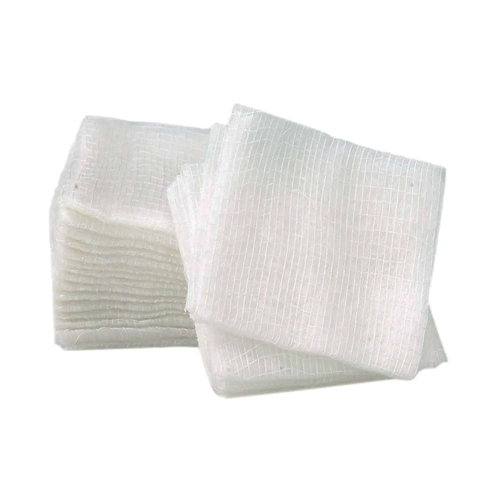
Dental gauze is a thin, translucent fabric with a loose open weave. It is typically supplied in pre-cut squares, the most common sizes being 2×2 inches (5cm \times 5cm) and 4×4 inches (10cm \times 10cm).
There are two primary manufacturing types:
- Woven Gauze: Features a traditional crisscross weave. It is generally used for debridement and cleaning because the texture helps “scrub” surfaces.
- Non-Woven Gauze: Produced by pressing fibers together to resemble a weave. It is softer, more absorbent, and produces much less lint (loose fibers), making it ideal for post-extraction sites where fibers shouldn’t get stuck in a healing clot.
Key Features
- High Absorbency: Specifically designed to wick away saliva, blood, and crevicular fluids to maintain a dry operative field.
- Wicking Action: Capable of pulling fluids into its center, keeping the surface in contact with the tissue relatively clean.
- Sterility Options: Available in sterile (individual peel-packs for surgery) and non-sterile (bulk sleeves for general cleaning) versions.
- Low-Linting (Non-Woven): High-quality dental gauze is engineered not to leave threads behind in the mouth or on instruments.
Usage in Dentistry
Gauze serves multiple critical functions during dental procedures:
| Application | Description |
| Hemostasis | Applied with firm pressure over an extraction socket to encourage blood clot formation. |
| Moisture Control | Used to retract the cheek or tongue and absorb excess saliva when a rubber dam is not in use. |
| Surface Preparation | Used to dry the mucosa before applying topical anesthetic or to wipe away “smear layers.” |
| Debridement | To clean surgical instruments or remove excess dental materials (like cement or composite) during a procedure. |
| Soft Tissue Exam | Used to grasp the tongue firmly but gently during oral cancer screenings. |
Clinical Tips
- Post-Extraction: Instruct patients to bite firmly on a folded sterile gauze pad for 30–45 minutes to ensure a stable clot forms.
- Avoid Over-Drying: When using gauze to dry a site for bonding, be careful not to leave stray fibers, which can compromise the bond strength of resins.