
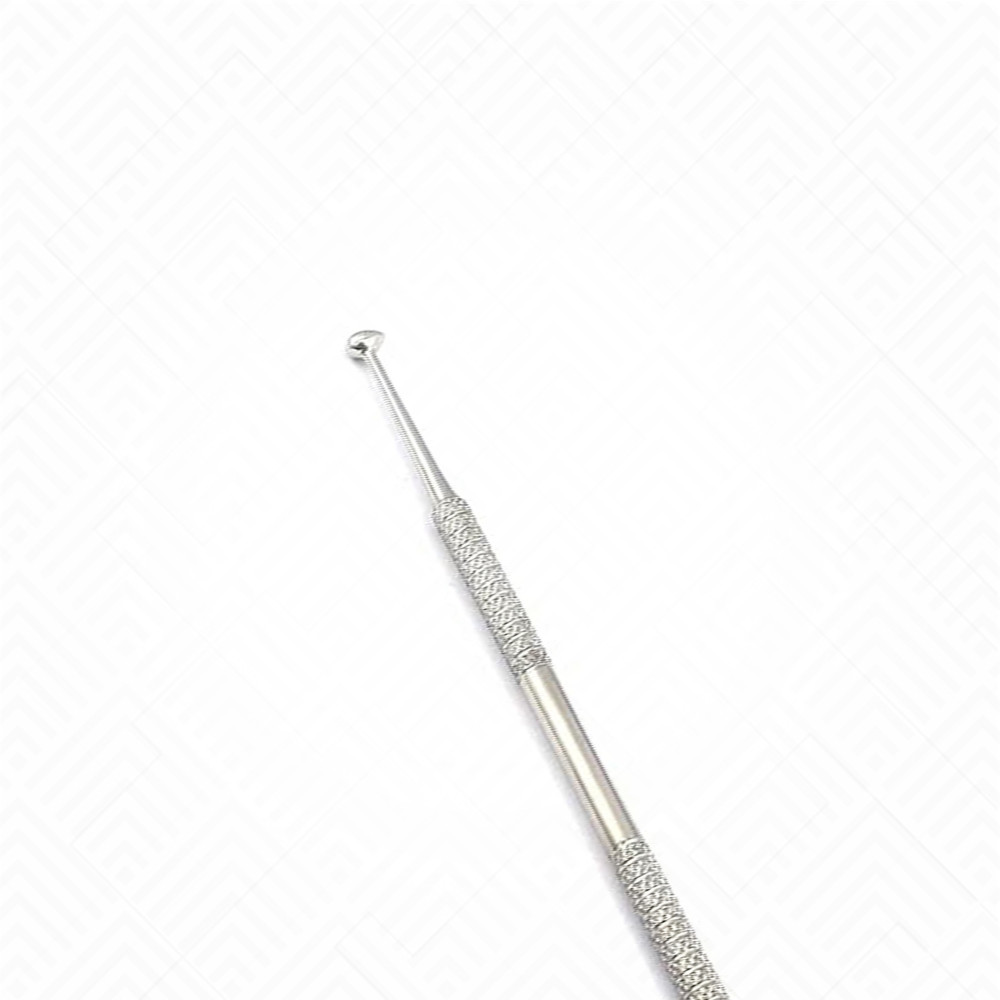
Burnishers are non-cutting hand instruments used in restorative dentistry to polish, smooth, and adapt dental materials (primarily amalgams and certain composites) to the margins of a cavity preparation. Unlike carvers, which remove excess material, burnishers are designed to manipulate the surface through pressure.
Description
Burnishers feature smooth, rounded working ends. They are typically double-ended and come in various shapes and sizes to accommodate different tooth anatomies and cavity types. They are essential for ensuring a seamless transition between the restorative material and the natural tooth structure.
Key Features
- Smooth Surface: The working ends are highly polished to prevent the instrument from sticking to or scratching the restorative material.
- Variety of Shapes: * Ball Burnisher: Spherical end for general smoothing and adapting.
- Egg/Ovoid Burnisher: Larger, rounded end for broad surfaces.
- Acorn/Anatomical Burnisher: Pointed but rounded tip used to create occlusal anatomy (grooves and pits).
- T-Ball Burnisher: A T-shaped end with a ball and a flat paddle for specialized adaptation.
- Ergonomic Handles: Usually made of stainless steel or high-grade resin for a secure grip during the application of pressure.
Usage and Clinical Application
Burnishers are used at specific stages of the restorative process:
- Adapting Margins: After placing the restorative material (such as dental amalgam), a burnisher is used to press the material tightly against the cavity walls. This ensures a “micro-seal” and reduces the risk of marginal leakage.
- Smoothing Surfaces: Used to remove small irregularities on the surface of the filling before it fully hardens.
- Refining Anatomy: The acorn burnisher is specifically used to “pre-carve” or define the primary grooves and fossae of a posterior tooth while the material is still moldable.
- Polishing: In the final stages of an amalgam restoration, light burnishing can bring excess mercury to the surface (which is then carved away) and create a smoother, more corrosion-resistant finish.
- Composite Manipulation: While less common than in amalgam work, specialized non-stick burnishers are used to adapt composite increments to the cavity floor or walls to prevent air voids.
Common Types Table
| Type | Shape | Primary Use |
| Ball | Small/Large Round | Adapting material to the base and walls. |
| Acorn | Conical/Pointed | Defining occlusal grooves and anatomy. |
| Egg (Ovoid) | Oval/Football | Smoothing large posterior restorations. |
| T-Ball | T-shaped | Adapting margins in hard-to-reach proximal areas. |