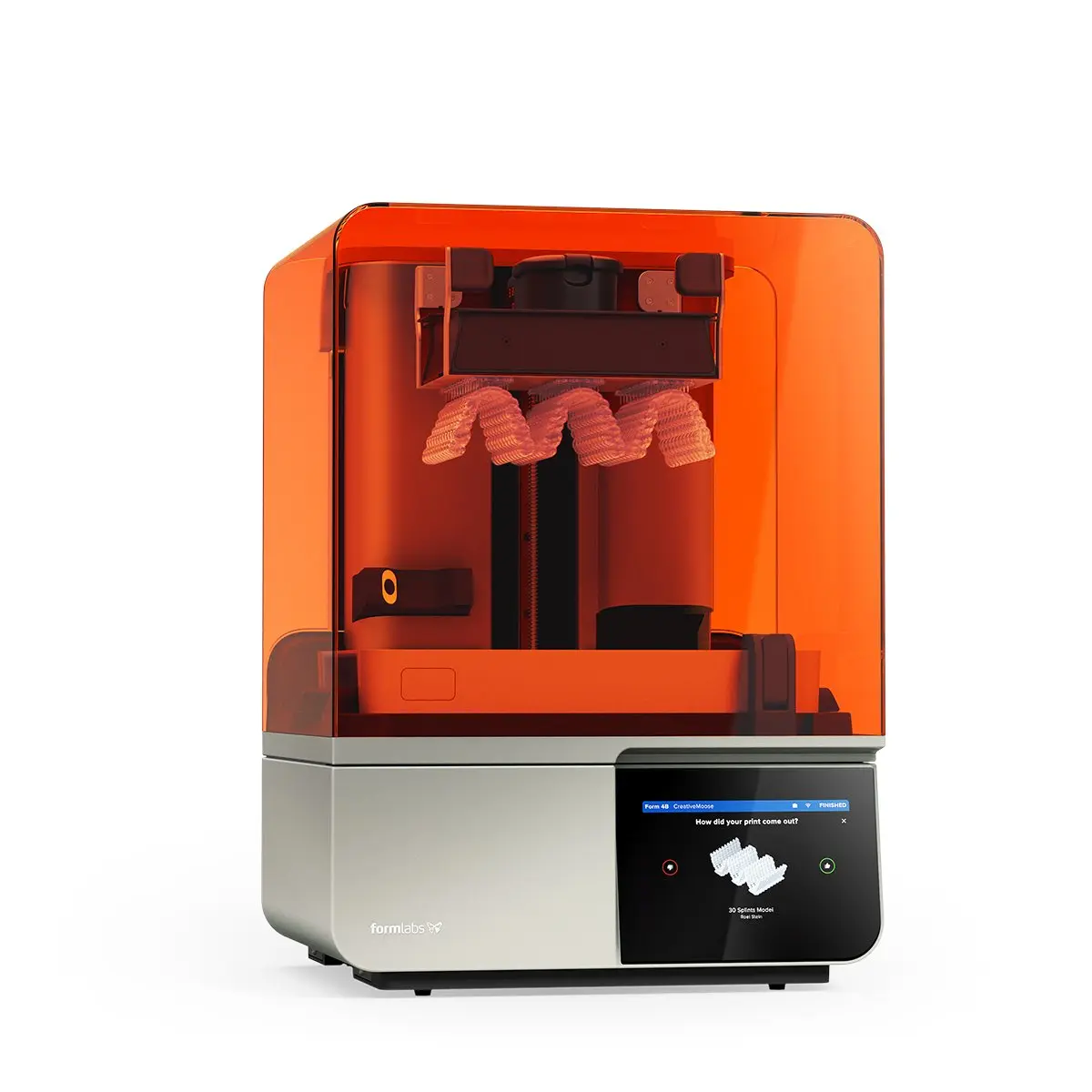
3D printing, also known as Additive Manufacturing (AM), has transitioned from a prototyping curiosity to a foundational pillar of modern digital dentistry. In 2026, it is estimated that over 70% of dental practices have adopted some form of 3D printing to improve clinical outcomes and patient experience.
Description
In a dental context, 3D printers create physical objects by joining materials—typically liquid resins or metal powders—layer by layer based on a digital 3D model. This model is usually generated from an Intraoral Scanner (IOS) or CBCT data, forming a seamless “Scan-to-Print” workflow.
Core Technologies in Dentistry
| Technology | Mechanism | Best For |
| SLA (Stereolithography) | A high-precision UV laser cures liquid resin point-by-point. | Highly detailed surgical guides and orthodontic models. |
| DLP (Digital Light Processing) | A projector cures an entire layer of resin at once. | Rapid production of crowns, bridges, and aligners. |
| LCD / MSLA | Uses an LCD screen as a mask for a UV light source. | Cost-effective, high-resolution daily office printing. |
| SLS (Selective Laser Sintering) | A laser fuses metal or nylon powder. | Metal frameworks, partial denture bases, and implants. |
Key Features
- Micron-Level Precision: Modern dental printers achieve resolutions as fine as 25–50 microns, ensuring a marginal fit that often surpasses traditional manual casting.
- Biocompatible Materials: 2026 marks a surge in “Smart Materials,” including bioactive resins and high-strength ceramics (like Zirconia or Lithium Disilicate) specifically for permanent intraoral use.
- Speed & Efficiency: Technologies like CLIP (Continuous Liquid Interface Production) allow for “Same-Day Dentistry,” where a crown or splint can be printed in under 30 minutes.
- Reduced Material Waste: Unlike “Subtractive” milling, which carves away at a block, 3D printing only uses the exact amount of material needed, reducing costs by up to 80%.
Clinical Usage
3D printers are now utilized across almost every dental specialty:
- Implantology (Surgical Guides): Printers produce patient-specific templates that dictate the exact angle and depth for implant placement, significantly reducing surgical risk.
- Orthodontics (Clear Aligners): Instead of one-size-fits-all, 3D printing allows for the mass-customization of aligners and retainers directly from digital scans.
- Prosthodontics (Permanent & Provisional): Fabrication of monolithic dentures, temporary hybrids, and increasingly, permanent crowns and veneers using ceramic-infused resins.
- Maxillofacial Surgery: Creating 1:1 anatomical models for preoperative planning and custom titanium plates for reconstructive surgery.
- Endodontics: 3D-printed guides help clinicians locate calcified canals with pinpoint accuracy, preserving more natural tooth structure.
Workflow Overview
- Capture: Digital impression via Intraoral Scanner.
- Design: CAD software (often AI-assisted) creates the digital restoration.
- Print: The file is sent to the 3D printer for fabrication.
- Post-Process: The printed object is washed in alcohol and “post-cured” in a UV light box to reach its full mechanical strength and biocompatibility.