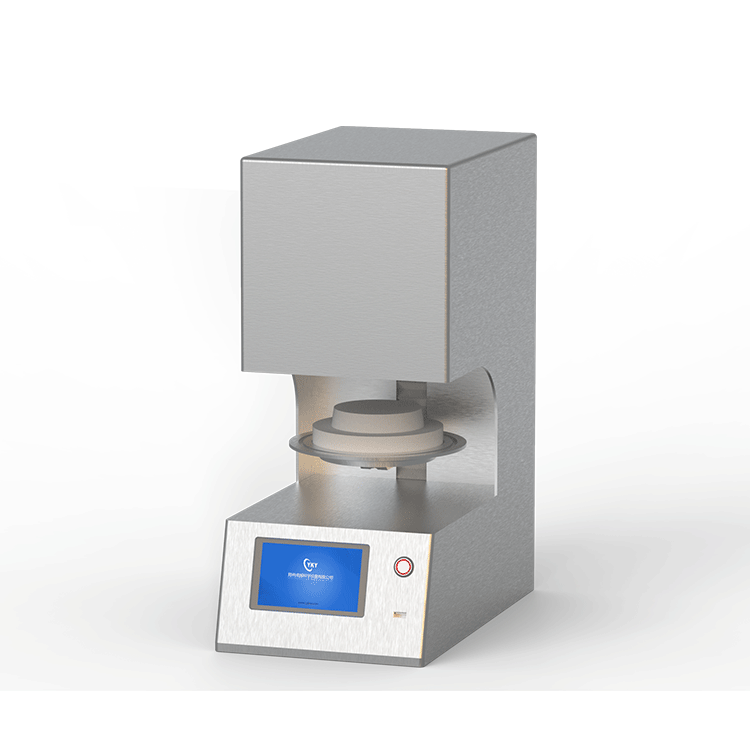
In the dental industry, furnaces (also known as sintering or firing units) are essential pieces of equipment used to process ceramic, zirconia, and metal restorations. They provide the controlled high temperatures and atmospheric conditions necessary to transform raw or milled materials into final, high-strength dental prosthetics.
1. Ceramic (Porcelain) Furnaces
These are used for the traditional “firing” or “glazing” of dental porcelain applied to metal frames (PFM) or all-ceramic cores.
- Description: A compact chamber that uses vacuum pressure to eliminate air bubbles and ensure the clarity and density of the porcelain.
- Key Features:
- Vacuum Control: Essential for preventing porosity in the ceramic.
- Programmable Cycles: Pre-set programs for different porcelain brands (heating rate, hold time, cooling).
- Precision Temperature Sensors: Often using Platinum-Rhodium thermocouples for accuracy within $\pm 1^\circ C$.
- Usage: Used for the “opaque” layer, “dentin/enamel” buildup, and the final “staining and glazing” to give the tooth a natural luster.
2. Zirconia Sintering Furnaces
Designed specifically for the high-temperature processing of milled zirconia frameworks and full-contour crowns.
- Description: High-capacity furnaces capable of reaching significantly higher temperatures than standard porcelain ovens.
- Key Features:
- Ultra-High Temperatures: Often reaching between 1,450°C and 1,600°C.
- Heating Elements: Usually made of MoSi2 (Molybdenum Disilicide) to withstand extreme heat without contaminating the zirconia.
- Fast Sintering: Modern “Speed” units can sinter a crown in under 90 minutes, compared to the traditional 8–12 hour cycles.
- Usage: After zirconia is milled in its “soft” (green) state, it is placed in the furnace to shrink and harden into its final, high-strength form.
3. Burnout Furnaces
Used primarily in the traditional “lost-wax” casting technique and for pressing lithium disilicate (e.g., E.max).
- Description: A heavy-duty oven used to melt and remove wax from an investment mold, leaving a hollow cavity for molten metal or ceramic.
- Key Features:
- Ventilation Systems: Designed to safely exhaust the smoke and gases produced by burning wax.
- Large Chambers: Can often hold multiple investment rings (molds) simultaneously.
- Usage: Pre-heating investment rings before casting metal or pressing glass-ceramics.
Comparison Summary
| Feature | Porcelain Furnace | Sintering Furnace | Burnout Furnace |
| Max Temp | Approx. $1,200^\circ C$ | $1,550^\circ C – 1,600^\circ C$ | Approx. $1,050^\circ C$ |
| Vacuum Needed? | Yes (Critical) | No | No |
| Primary Material | Porcelain / Glaze | Zirconia | Wax / Investment |
| Main Goal | Esthetics & Density | Strength & Shrinkage | Wax Removal |
Safety and Maintenance Note
- Calibration: Furnaces must be calibrated regularly using silver wire tests or dedicated calibration rings to ensure the internal temperature matches the display.
- Contamination: Sintering beads and heating elements should be kept clean; any debris can cause discoloration (purpling or graying) of the dental restorations.