
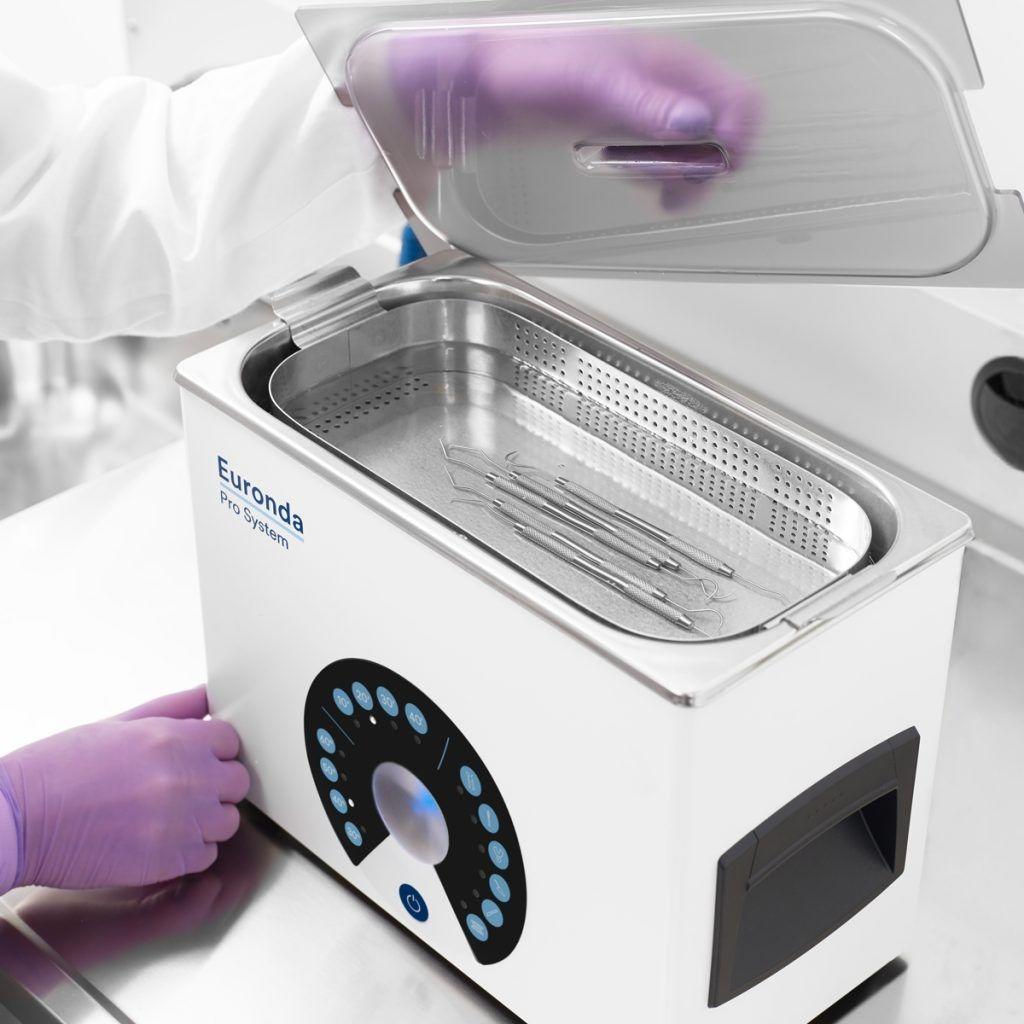
In a dental or medical setting, ultrasonic cleaners are the first line of defense in the instrument reprocessing cycle. They use high-frequency sound waves to remove organic matter—such as blood, saliva, and debris—from clinical instruments before they are sterilized in an autoclave.
Description
An ultrasonic cleaner consists of a stainless steel tank filled with a specialized cleaning solution. At the base or sides of the tank, transducers convert electrical energy into high-frequency sound waves (typically between 25 kHz and 45 kHz).
These waves create millions of microscopic bubbles in the liquid, a process known as cavitation. When these bubbles collapse (implode) against the surface of the instruments, they create a powerful scrubbing action that dislodges contaminants even from the smallest crevices, hinges, and serrations.
Key Features
- Cavitation Technology: Reaches areas that manual scrubbing cannot, such as the internal box locks of forceps or the fine threads of surgical tips.
- Digital Timers & Heaters: Most professional units allow for precise control over the cleaning cycle (usually 5–15 minutes) and the solution temperature to enhance chemical activity.
- Sweep Technology: Automatically shifts the frequency of the waves to ensure there are no “dead zones” in the tank, providing uniform cleaning.
- Degas Mode: A specific setting that removes air from freshly mixed solution, which is essential because air bubbles can absorb sound waves and reduce cleaning efficiency.
- Safety Baskets: Suspends instruments away from the bottom of the tank to prevent damage to the transducers and ensure optimal wave circulation.
Usage and Protocol
To ensure effective decontamination, the following steps are generally followed:
- Preparation: Fill the tank with water and the appropriate concentration of enzymatic or specialized ultrasonic cleaning solution.
- Degassing: Run a 5-minute cycle without instruments to remove dissolved air from the liquid.
- Loading: Place instruments in the wire basket. Ensure they are submerged and not overcrowded. Hinged instruments (like scissors or pliers) must be in the open position.
- Cleaning Cycle: Cover the tank with the lid (to prevent aerosolization of contaminants) and set the timer. A standard cycle is typically 10 to 15 minutes.
- Rinsing & Drying: Once the cycle is complete, remove the basket and rinse the instruments thoroughly under running water to remove residual chemicals. Dry them completely before proceeding to packaging and sterilization.
- Maintenance: Change the solution at least daily, or sooner if it becomes visibly soiled.
Comparison: Manual Scrubbing vs. Ultrasonic Cleaning
| Feature | Manual Scrubbing | Ultrasonic Cleaning |
| Efficiency | Inconsistent; prone to human error | Highly consistent and thorough |
| Safety | High risk of sharps injuries | Low risk (minimal handling of sharp edges) |
| Access | Cannot reach internal hinges/crevices | Penetrates all microscopic surfaces |
| Aerosols | Lower | Higher (requires a lid during operation) |