In dentistry, Dental Wax refers to a variety of thermoplastic materials composed of natural and synthetic waxes, resins, and coloring agents. Because different clinical and laboratory procedures require different physical properties (such as hardness, tackiness, or melting point), dental waxes are highly specialized.
1. Classification and Description
Dental waxes are generally categorized by their intended use:
- Pattern Waxes: Used to create the predetermined size and form of a restoration (like a crown or denture base) which is later replaced by metal or ceramic.
- Processing Waxes: Used primarily as auxiliary aids during various clinical or laboratory steps (e.g., boxing or sticky wax).
- Impression Waxes: Used to record the shape of oral structures or occlusal relationships.
2. Common Types and Features
| Type | Material Features | Primary Usage |
| Inlay Wax | Hard and brittle; low thermal expansion; carves without flaking. | Creating patterns for crowns, bridges, and inlays for the “lost wax” casting technique. |
| Baseplate Wax | Pink color; rigid at mouth temperature but pliable when heated. | Establishing the initial arch form and tooth arrangement for full or partial dentures. |
| Sticky Wax | Very brittle at room temperature; becomes very tacky when melted. | Temporarily holding broken denture pieces or metal parts together during repair. |
| Utility / Periphery Wax | Soft and tacky at room temperature; easily molded by hand. | Extending the borders of impression trays to protect soft tissues. |
| Boxing Wax | Wide, flat strips; very pliable; easy to seal to a surface. | Forming a “fence” around an impression to contain the liquid stone during model pouring. |
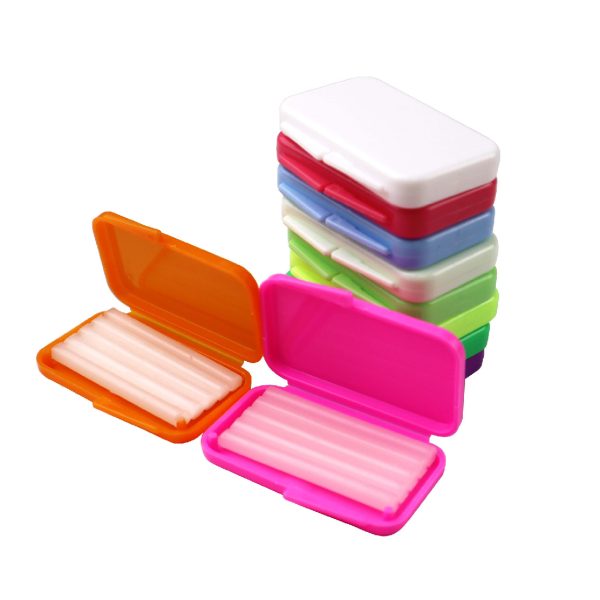
| Orthodontic Wax | Clear/white; medical-grade; silicone or paraffin-based. | Applied by patients to brackets or wires to prevent irritation to cheeks and lips. |
3. Key Physical Features
- Thermoplasticity: These materials soften when heated and harden when cooled, allowing for easy manipulation.
- Melting Range: Unlike pure chemicals, dental waxes melt over a range of temperatures, which provides a “working window.”
- Flow: This refers to the ability of the wax to deform under a specific load. For example, inlay wax must have low flow at mouth temperature to prevent distortion.
- Coefficient of Thermal Expansion: High precision is required; if a wax pattern expands or contracts too much with temperature changes, the final metal crown will not fit.
- Burn-out Property: Pattern waxes are designed to leave zero residue when heated in a furnace, ensuring a clean mold for casting.
4. General Clinical & Lab Usage
- Preparation: The wax is heated using a Bunsen burner, an electric wax carver, or a warm water bath.
- Manipulation: The softened wax is applied to a die (for crowns) or a model (for dentures) and shaped using specialized carving instruments.
- Refinement: Fine details, such as the occlusal anatomy of a tooth, are carved into the hardened wax.
- Transformation: The wax pattern is “invested” in a stone-like material. The wax is then melted out (Burn-out), leaving a cavity that is filled with molten gold, chrome-cobalt, or pressed ceramic.