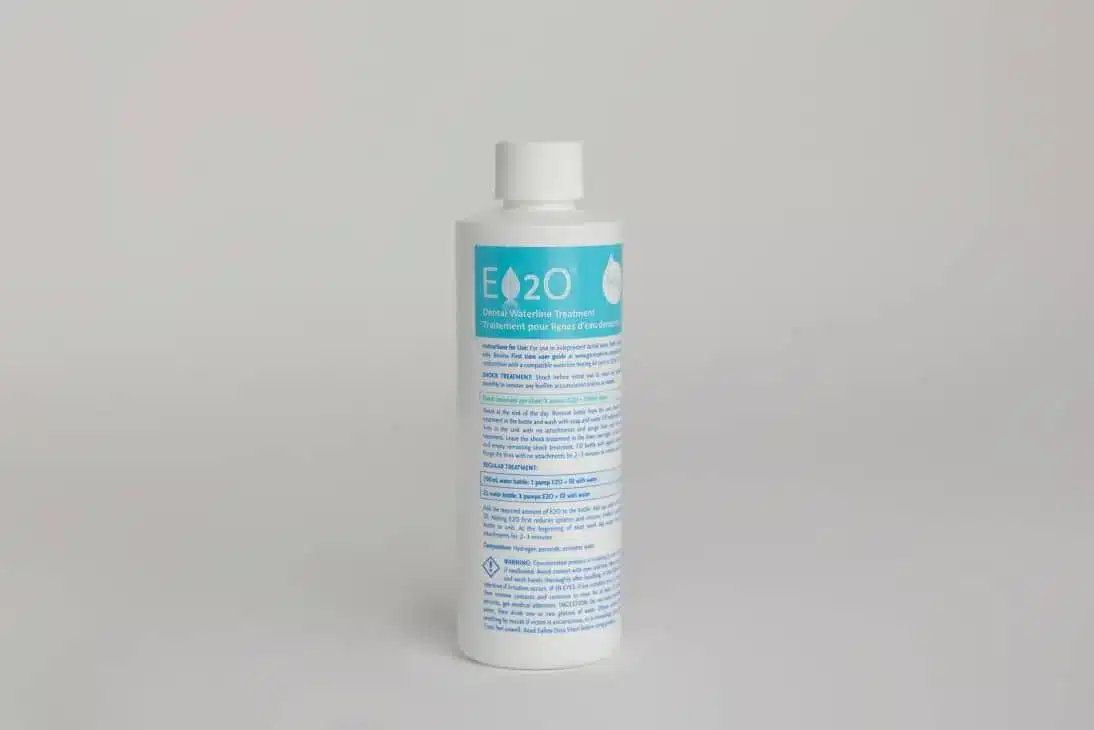
Dental Unit Waterline (DUWL) Treatment refers to the systems and chemical protocols used to prevent the growth of biofilm and keep the bacterial count in dental water below safe limits (typically ≤500 CFU/mL per ADA/CDC guidelines).
Because dental waterlines have small diameters and low flow rates, they are highly prone to bacterial contamination. A professional maintenance routine typically follows a “Maintain, Monitor, and Shock” protocol.
1. Types of Waterline Treatments
There are two primary categories of treatment products: Continuous Maintenance (daily use) and Shock Treatments (deep cleaning).
- Continuous Maintenance Products (Daily): These use low-level antimicrobials (often silver or iodine-based) that are safe for patient contact. They are designed to be present in the water at all times to inhibit new bacterial growth.
- Shock Treatments (Weekly/As Needed): These are high-level disinfectants (like diluted bleach or specialized liquid biocides) used to strip established biofilm from the lines. Note: Shock solutions are NOT safe for patient contact and must be thoroughly flushed before treatment begins.
2. Key Features
- Effervescent Tablets: BluTab and A-dec ICX are popular because they require no measuring; you simply drop a tablet into the water bottle before refilling.
- Residual Effect: Many maintenance products remain active for up to 14–28 days, meaning they continue to protect the lines even during periods of non-use (like weekends).
- Material Compatibility: Professional treatments are specifically formulated to be non-corrosive and will not damage the internal components of the dental unit or interfere with restorative bonding materials.
- Visual Indicators: Some shock treatments, like ICX Renew, use a blue dye to show the solution is present in the lines and to ensure it has been fully flushed out.
3. Usage & Protocol
For a compliant dental office, the workflow generally follows these steps:
- Initial Shock: Before starting a new maintenance regimen, the lines should be “shocked” to remove any existing biofilm.
- Daily Maintenance: Add a maintenance product (like a BluTab maintenance tablet every time the independent water bottle is refilled.
- Between Patients: Flush the air/water syringe and handpiece lines for 20–30 seconds to physically clear any patient material that may have entered the system.
- Monitoring: Regularly test the water quality using an in-office test kit or mail-in laboratory service. If bacterial levels exceed 500 CFU/mL, a new shock treatment is required.