
1. Description
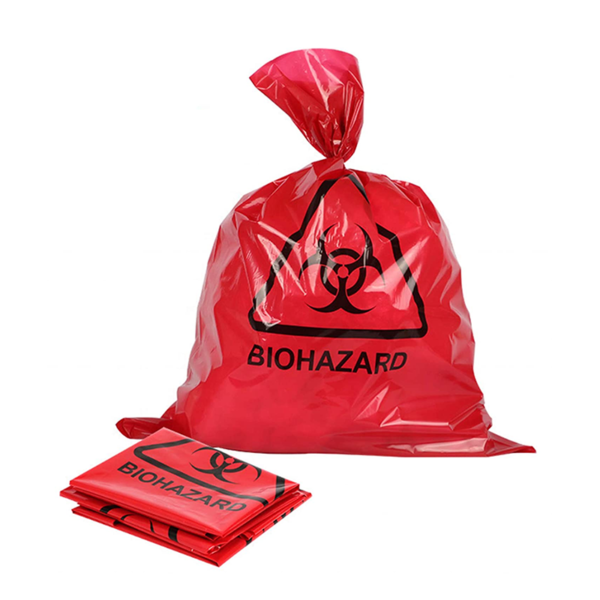
Biohazard Bags are heavy-duty, leak-proof plastic bags used to identify and contain hazardous medical waste. In a dental practice, they serve as the primary collection point for non-sharp regulated waste. They are universally color-coded—typically bright red or orange-red—and must prominently display the international biohazard symbol to alert staff and waste handlers of the infectious nature of the contents.
2. Key Features
To meet clinical safety standards (such as OSHA or international equivalents), these bags typically include the following technical features:
- High-Density Material: Constructed from high-strength polyethylene (HDPE) or linear low-density polyethylene (LLDPE) to provide superior tear and puncture resistance.
- Leak-Proof Sealing: Feature reinforced bottom seals (often “star seals”) to prevent the leakage of fluids or moisture.
- Universal Biohazard Labeling: Pre-printed with the biohazard symbol and warnings in multiple languages (usually English and Spanish) for clear identification.
- Autoclavable Options: Many versions are designed to withstand high temperatures (up to 121°C or 135°C) allowing them to be placed directly into a steam sterilizer for decontamination before final disposal.
- Vibrant Color Coding: The high-visibility red color ensures they are never confused with regular office trash or recycling.
3. Usage in Dental Settings
The use of biohazard bags is strictly regulated to ensure clinical safety and environmental compliance.
- Collection of Regulated Waste: Used for items saturated with blood or saliva that would “release” fluid if compressed, such as heavily soaked gauze, cotton rolls, or surgical sponges.
- Disposal of Soft Tissue: Safe containment for small amounts of non-anatomical waste or soft tissue removed during oral surgery.
- Contaminated PPE Disposal: Used for disposing of heavily soiled disposable gowns, gloves, or masks following high-aerosol procedures or surgery.
- Point-of-Use Placement: Typically placed inside a sturdy, lidded, and foot-pedal operated waste can to allow for hands-free disposal during dental procedures.
- Pre-Disposal Sterilization: For clinics that process their own waste, autoclavable bags are used to hold contaminated items during the sterilization cycle before they are moved to the secondary hauling container.