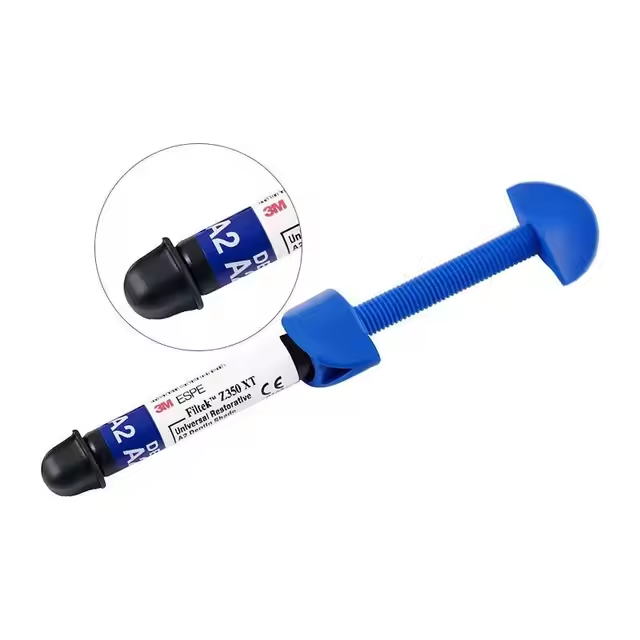
Universal (Packable) Composites
Universal composites, often referred to as “packable” or “posterior” composites due to their high viscosity, are designed to mimic the handling characteristics of dental amalgam. They are formulated to withstand the high-pressure forces of the posterior (back) teeth while providing the aesthetic benefits of resin-based materials.
Key Features
- High Filler Loading: These materials contain a higher percentage of inorganic filler (often 70% to 80% by weight), which provides superior mechanical strength and wear resistance.
- High Viscosity: Unlike flowable composites, packable versions have a “stiff” consistency. This allows the clinician to use a plugger to condense the material into the cavity preparation.
- Low Polymerization Shrinkage: Due to the high filler-to-resin ratio, these composites exhibit less shrinkage when light-cured, reducing the risk of marginal gaps and post-operative sensitivity.
- Excellent Polishability: Modern universal composites use nano-hybrid technology, allowing them to achieve a high-gloss finish that resists staining and plaque accumulation.
- Radiopacity: They are highly visible on X-rays, making it easy to distinguish the restoration from recurrent decay or natural tooth structure.
Clinical Usage
Universal composites are versatile and can be used in almost any area of the mouth, though they excel in specific scenarios:
- Class I and II Restorations: Their primary use is for posterior cavities where occlusal (biting) forces are highest. The “packability” helps in establishing a tight proximal contact with neighboring teeth.
- Class III and V Restorations: While thicker, they can be layered in anterior (front) teeth to provide a strong base or to replace lost dentin.
- Core Build-ups: Because of their strength, they are frequently used to build up a tooth that has lost significant structure before a crown is placed.
- Diastema Closures: Their ability to hold its shape (non-slumping) makes them ideal for closing gaps between teeth without the material running or sagging.
Application Steps
- Preparation: The tooth is cleaned and decayed tissue is removed.
- Etching and Bonding: An acid etchant is applied to create a micro-porous surface, followed by a bonding agent (adhesive) that is light-cured.
- Placement: The composite is placed in increments (usually $2mm$ or less) to ensure complete light penetration and to manage shrinkage stress.
- Condensation: A hand instrument is used to “pack” the material against the cavity walls.
- Curing: Each layer is exposed to a high-intensity curing light for a specified time (usually 10–20 seconds).
- Finishing and Polishing: The final restoration is shaped with burs and polished to a smooth, natural-looking shine.