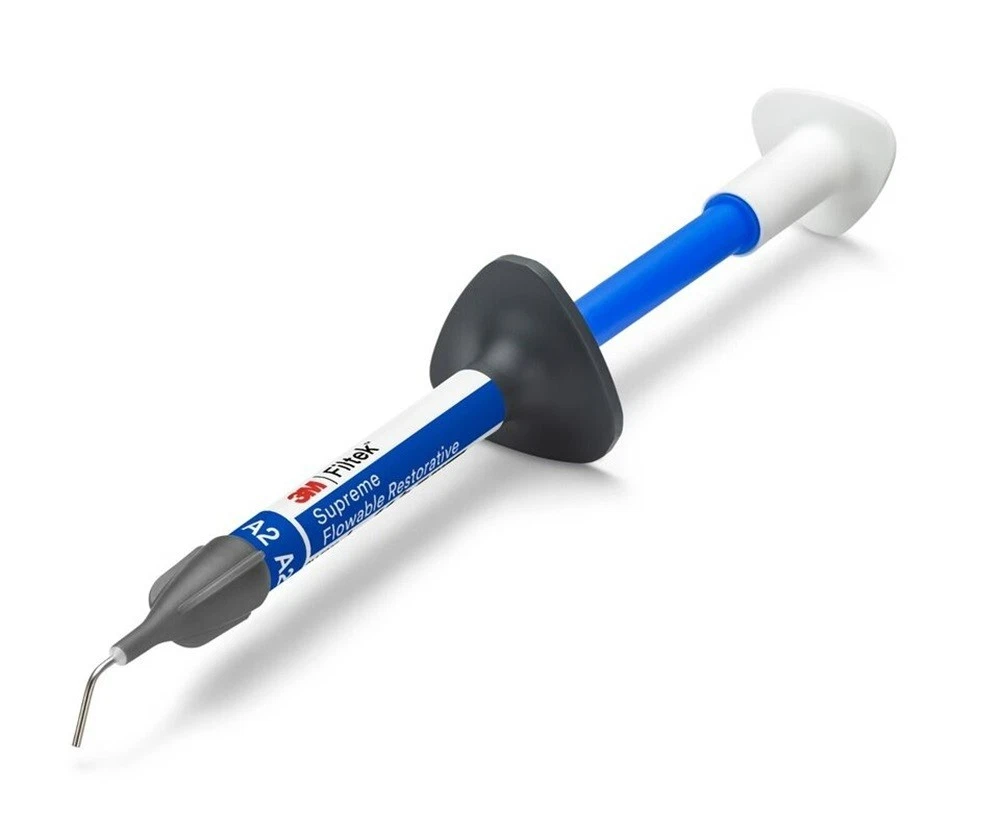
In restorative dentistry, the success of a composite restoration depends heavily on the instruments used to adapt, contour, and sculpt the resin. These tools are typically made of high-quality stainless steel or medical-grade plastic, often featuring specialized non-stick coatings.
1. Composite Placement Pluggers (Condensers)
Description: Hand instruments with flat or rounded working ends, used to carry and pack composite material into the cavity preparation.
- Key Features:
- Double-ended: Usually feature different sized tips on each end.
- Non-stick coating: Often coated with Titanium Nitride (TiN) or Aluminum Titanium Nitride (AlTiN) to prevent the resin from pulling away during placement.
- Serrated vs. Smooth: Most modern composite pluggers are smooth to avoid trapping air or leaving texture inside the material.
- Usage: Used for the initial placement of Packable or Universal composites. They help adapt the material to the floor and walls of the cavity to ensure no voids are present.
2. Composite Sculpting Instruments (Carvers/Plastic Instruments)
Description: Highly flexible or rigid blade-like instruments designed to mimic the natural anatomy of the tooth (cusps and ridges).
- Key Features:
- Thin Blades: Allow for precise shaping in interproximal (between teeth) areas.
- Anatomical Shapes: Some tips are shaped like “acorns” or “beaver tails” to assist in forming the occlusal (biting) surface.
- Flexibility: High-end models (like the LM-Arte series) offer specific flexibility levels for different viscosity resins.
- Usage: Used to “carve” the composite before it is light-cured. They are essential for recreating the pits, fissures, and slopes of a tooth.
3. Composite Brushes & Modeling Resins
Description: Small, fine-tipped brushes used in conjunction with a “modeling resin” (a wetting agent) to smooth the surface of the composite.
- Key Features:
- Synthetic Bristles: Designed to not shed into the restoration.
- Interchangeable Tips: Different shapes (flat, pointed) for different tooth surfaces.
- Usage: Brushes are used for the “Final Smoothing” stage. They eliminate instrument marks and help blend the composite seamlessly into the natural tooth margin (the “invisible” fill).
4. Compules and Dispensing Guns
Description: Mechanical delivery systems used to extrude composite directly into the tooth.
- Key Features:
- Ergonomic Design: Reduces hand fatigue for the clinician.
- High Leverage: Necessary for high-viscosity (stiff) packable composites.
- Usage: The composite “compule” (a small pre-filled tip) is loaded into the gun, allowing the dentist to place the material precisely without using a secondary carry instrument.
Tool Comparison Summary
| Tool Category | Primary Function | Best For… |
| Plugger/Condenser | Adaptation & Packing | Eliminating voids at the cavity base. |
| Sculpting Blade | Contouring & Anatomy | Re-creating cusps and marginal ridges. |
| Modeling Brush | Surface Smoothing | Achieving a seamless, polished finish. |
| Dispensing Gun | Material Delivery | Direct placement from compule to tooth. |
Professional Tips for Tool Maintenance:
- Avoid Alcohol: Never wipe composite tools with alcohol during a procedure, as it can degrade the resin’s chemical bond. Use a dry gauze or a specialized modeling resin instead.
- Check the Coating: If the gold or black coating on your instrument starts to peel, it will become “sticky,” making it difficult to achieve a smooth restoration.