
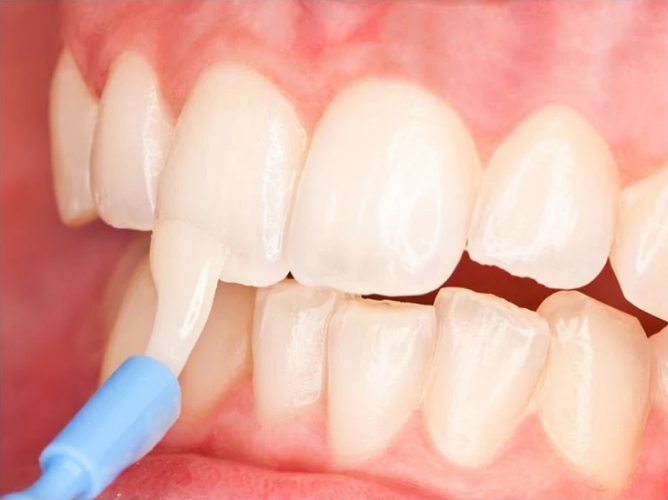
Fluoride Varnishes: Overview and Clinical Application
Fluoride varnish is a highly concentrated form of topical fluoride applied to the tooth surface by a dental professional. Unlike fluoride gels or foams, varnish is designed to adhere to the enamel for several hours, providing prolonged contact between the fluoride ions and the tooth structure.
Description
Fluoride varnish is typically a pale yellow or clear resin-based liquid containing 5% Sodium Fluoride (NaF), which equates to approximately 22,600 ppm (parts per million) of fluoride. It is suspended in an alcohol-based resin carrier that hardens immediately upon contact with saliva, forming a thin, sticky film over the teeth.+1
Key Features
- High Adhesion: It sticks to the tooth surface even in the presence of moisture, allowing for a slow and sustained release of fluoride over 4 to 6 hours.
- Rapid Setting: The varnish sets (hardens) instantly when it touches saliva, eliminating the need for bulky trays and reducing the risk of the patient swallowing the material.
- Hypersensitivity Relief: It effectively seals open dentinal tubules, providing immediate relief for patients with dentin hypersensitivity.
- Safety Profile: Because it is applied in small, controlled amounts and adheres to the teeth, the risk of systemic ingestion is significantly lower than with traditional fluoride rinses or foams, making it the preferred choice for young children.
- Esthetics: Modern varnishes are often “white” or translucent, ensuring they are virtually invisible once applied.
Usage and Clinical Procedure
The application of fluoride varnish is a quick, non-invasive procedure often performed during a routine cleaning or check-up.
| Step | Action |
| Preparation | Use a gauze square to remove excess saliva and “lightly” dry the teeth. Total dryness is not required as the varnish is moisture-tolerant. |
| Mixing | Stir the varnish (if using a unit-dose pack) to ensure the sodium fluoride is evenly distributed within the resin. |
| Application | Apply a thin layer to all tooth surfaces (occlusal, buccal, and lingual) using a small disposable brush. |
| Post-Op Instructions | Advise the patient to avoid brushing or flossing for 4 to 6 hours. They should also avoid crunchy, hard, or hot foods and beverages during this period. |
Common Clinical Indications
- Caries Prevention: Used for patients at moderate-to-high risk of developing cavities.
- Remineralization: Aids in the reversal of “white spot lesions” (early-stage enamel demineralization).
- Root Sensitivity: Applied to exposed root surfaces to reduce sensitivity caused by recession.
- Pediatric Care: Ideal for toddlers and children who cannot tolerate fluoride trays or who might swallow rinse.