
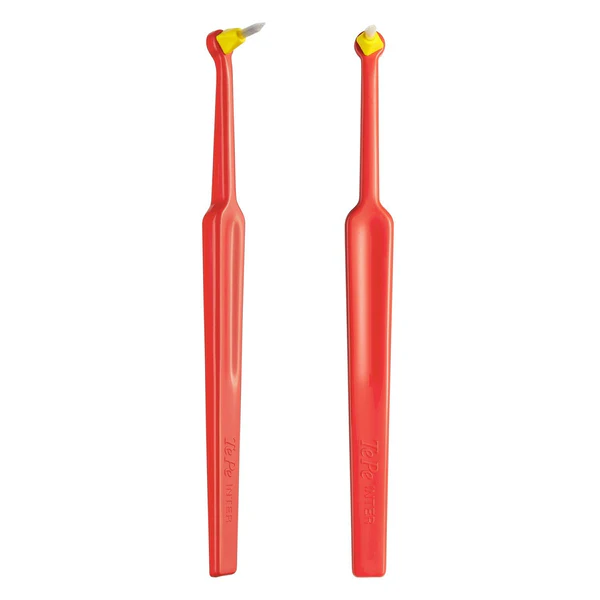
Description
Specialty Brushes are precision-engineered oral hygiene tools designed for specific clinical conditions or anatomical areas that a standard manual or electric toothbrush cannot effectively reach. In a dental practice, these are essential “problem-solver” tools often recommended by dental hygienists for patients with complex restorative work, orthodontic appliances, or specific periodontal needs.
Key Features
- Small, Targeted Brush Heads: Features significantly smaller heads (such as single-tuft or tapered designs) to allow for pinpoint accuracy in confined spaces.
- Angled Neck Designs: Ergonomically angled handles or necks that provide better access to the posterior (back) of the mouth and the lingual (tongue-side) surfaces of the teeth.
- Varied Bristle Textures: Available in ultra-soft configurations for post-surgical healing or firm textures for cleaning removable appliances like dentures.
- Task-Specific Trim Patterns: Bristles may be trimmed into a “v-shape” for braces, a “dome-shape” for the gum line, or a flat, stiff profile for prosthetic maintenance.
- Compact Handles: Often designed with slim or textured grips to allow for delicate, controlled movements rather than the broad scrubbing motion used with regular brushes.
Usage
- Orthodontic Care: Cleaning around brackets, wires, and bands where plaque easily accumulates and causes “white spot” lesions.
- Post-Surgical Cleaning: Using ultra-soft specialty brushes to gently clean around surgical sites, sutures, or dental implants during the initial healing phase without traumatizing the tissue.
- Hard-to-Reach Areas: Cleaning the distal (back) surface of the last molars or crowded teeth where a standard brush head is too bulky to fit.
- Prosthetic Maintenance: Scrubbing the undersides of fixed bridges, overdentures, and dental implant abutments to prevent peri-implantitis.
- Furcation and Recession Care: Targeted cleaning of exposed tooth roots or the gaps between roots (furcations) caused by advanced periodontal disease.
- Gingival Sulcus Cleaning: Using a “sulcus brush” (usually two rows of bristles) to clean specifically within the shallow pocket between the tooth and the gum.